Bill Gates’ Fascination With Solar Geoengineering
Gates supports the “non-toxic” calcium carbonate chemical, in hopes to combat global warming.
ARTICLE
5/23/20263 min read
Written By Symphony
Symphony is a writer who covers systems and communities.
SymphonyLedger.com
Bill Gates, born William Henry Gates III, is an American businessman and philanthropist best known for co-founding Microsoft, the world’s largest software company, with Paul Allen in 1975.
In recent years, Gates has publicly supported research into solar geoengineering — a proposed climate intervention strategy designed to reflect a small portion of sunlight away from Earth in order to reduce global warming. Some researchers and investors have explored the possible use of reflective particles, including calcium carbonate aerosols, in the upper atmosphere to temporarily cool the planet.
Supporters of solar geoengineering argue that the technology could reduce global temperatures by decreasing the amount of solar energy absorbed by Earth. They also acknowledge that it would not solve climate change at its source, but instead act as a temporary measure while emissions reductions continue.
However, critics argue that the risks and ethical concerns surrounding solar geoengineering are not discussed enough. Some scientists and environmental advocates worry that altering the atmosphere could disrupt weather patterns, stress ecosystems, contribute to droughts in some regions, and create unintended long-term consequences for agriculture and biodiversity.
Global warming is an important issue that deserves serious attention, but there are many root causes humanity could focus on before experimenting with planetary climate intervention.
Global warming in 2026 is largely driven by the buildup of greenhouse gases in Earth’s atmosphere — especially carbon dioxide (CO₂), methane, and nitrous oxide — caused by human activity over the past two centuries.
Modern society depends heavily on fossil fuels such as coal, oil, and natural gas for electricity generation, transportation, shipping, manufacturing, and construction. When these fuels are burned, they release large amounts of carbon dioxide into the atmosphere.
Industrial agriculture also contributes heavily to environmental stress. Methane emissions from cattle digestion, fertilizer use, land clearing, and mass-scale crop cultivation all play a role in warming the planet.
Construction and overdevelopment are additional contributors. Every time I turn my head, there is another project going up or being torn down. These industries require enormous amounts of transportation, cement, steel, chemicals, and energy.
So do you see the pattern of overconsumption and high-demand materials?
Humanity has normalized lifestyles that place enormous strain on both people and the environment. Rising global temperatures, melting glaciers, Arctic sea ice decline, and rising sea levels require intentional long-term solutions — not simply technological shortcuts.
To me, solar geoengineering feels similar to putting a topical steroid cream on severe eczema while ignoring the unhealthy environment and habits causing the condition underneath.
Critics of these programs argue that wealthy investors and private institutions should not hold disproportionate influence over planetary climate experiments without broader public trust, transparency, or democratic accountability.
In my opinion, Gates promotes much of his work as philanthropy, but many people question whether billionaire-led global initiatives truly serve the public interest.
The Bill & Melinda Gates Foundation has been connected to vaccine distribution, malaria research, polio eradication efforts, maternal and child health programs, education initiatives, agricultural development projects in lower-income countries, and climate-related research efforts.
In my opinion, Bill Gates hyper-fixates on controlling systems connected to health, agriculture, education, climate, and essential human resources. That level of influence concerns me deeply.
Everything he touches turns sour for citizens. It is my belief that Bill Gates operates from a worldview that prioritizes elite interests over ordinary people, while keeping his own family protected from public scrutiny.
He consistently connects himself to systems that influence the outcome of everyday life.
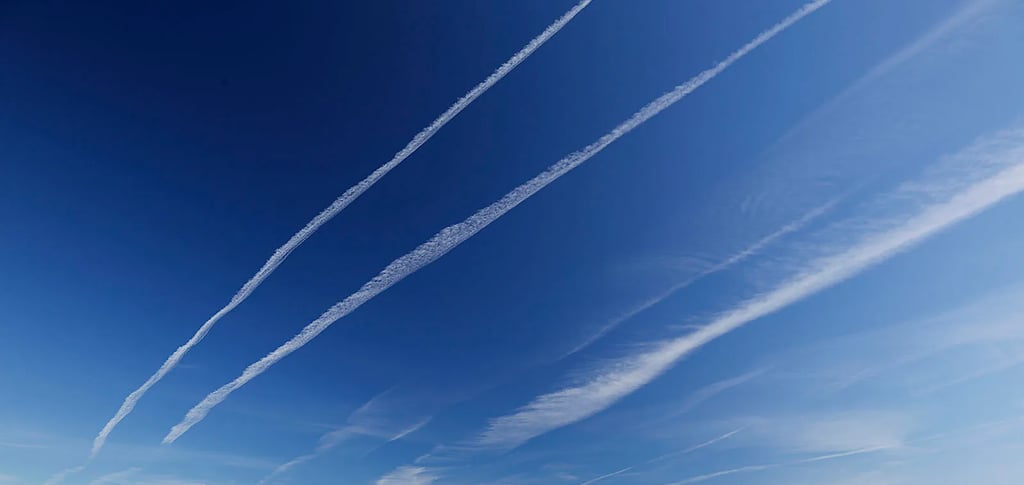
The reason I take such offense to these ideas is because they affect me and my loved ones. When I see aircraft crossing the sky with visible trails, I think to myself: What exactly is happening in our atmosphere, and who gets to decide these experiments?
The sun is an important natural resource and should not be manipulated recklessly.
According to Mike Hulme in a CNBC documentary discussing solar geoengineering, he described the concept as “cheap and dangerous.” Kate Ricke also noted concerns about how one project could potentially affect the entire planet.
Many universities and organizations continue to discuss climate intervention strategies. Harvard University previously operated the Solar Geoengineering Research Program, which included the Stratospheric Controlled Perturbation Experiment (SCoPEx), a controversial research initiative that was ultimately canceled.
Countries, people, and foundations frequently involved in geoengineering and climate intervention discussions include the United States, the United Kingdom, Germany, China, and Japan. Bill Gates, Laura and John Arnold, G. Leonard Baker, Jr., Alan Eustace, Howard Fischer, Ross Garon, Drew Myers, John Rapaport, Chris and Crystal Sacca, Michael Smith, Andrew Stark, Bill Trenchard, J. Baker Foundation, The Blue Marble Fund, OW Caspersen Foundation, The Crows Nest Foundation, The William and Flora Hewlett Foundation, Constance C. and Linwood A. Lacy Jr. Foundation, The Open Philanthropy Project, Pritzker Innovation Fund, Ronin Private Investments LLC, The Alfred P. Sloan Foundation, The Tansy Foundation, Teza Technologies LLC, VoLo Foundation, and The Weatherhead Center for International Affairs
Also, what's up with the Epstein files?
Resources Used:
CNBC documentaries, university research publications, public interviews, YouTube, Google research, and artificial intelligence tools.